Can cats eat chicken?
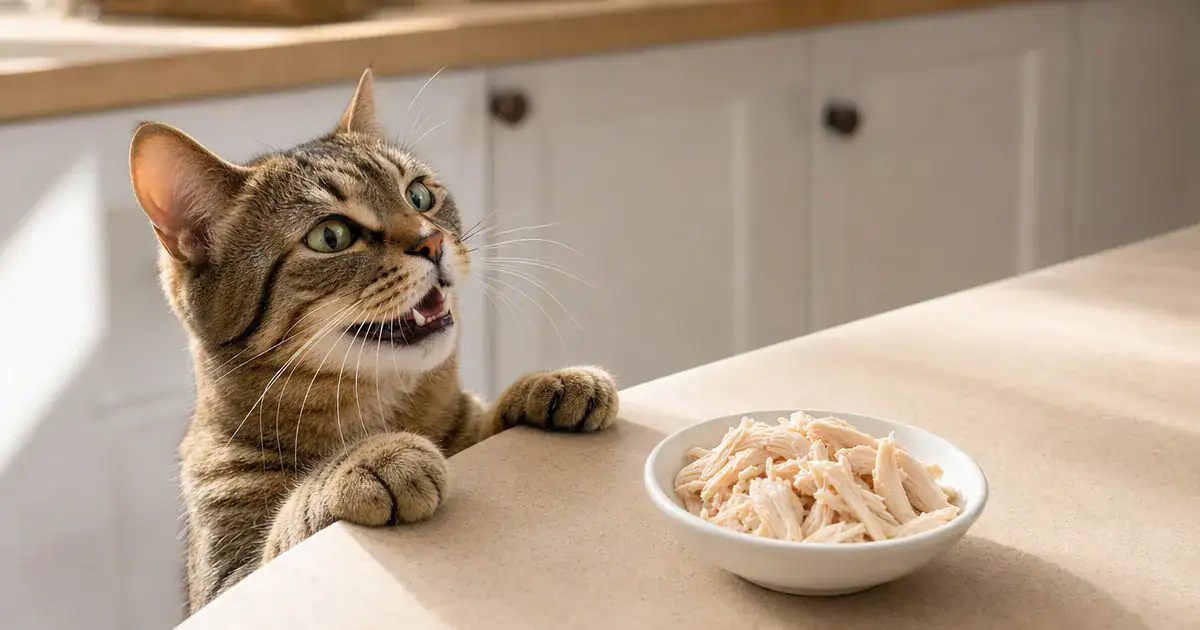
Let me be honest with you. Of all the smells that drift out of a human kitchen, roast chicken is the one that brings every cat running. I have abandoned a perfectly good nap for it more than once. So it is no surprise that the question turns up again and again: can cats eat chicken?
The good news is yes, cats can eat chicken, and most of us love it. In fact, plain cooked chicken is one of the better treats you can share. There are a few rules though, and they matter, so let me walk you through them like the sensible old cat I am.
Can cats eat chicken at all?
Cats are obligate carnivores, which is a fancy way of saying we are built to run on meat. Chicken fits that nature beautifully. It is lean, packed with protein, and easy for a cat’s tummy to handle. The protein helps keep muscles strong, and the taste keeps even the fussiest feline interested.
Here is the part to remember. Plain cooked chicken makes a lovely treat, but it is not a complete meal on its own. It does not carry every vitamin and mineral a cat needs to stay well. So think of chicken as a tasty extra, not a replacement for proper, balanced cat food.
Cooked chicken versus raw chicken
This is where a little care goes a long way.
Cooked chicken: the safe choice
Plain cooked chicken is the way to go. Boiled, baked or steamed all work well, as long as it is cooked all the way through with no pink left in the middle. Let it cool before it reaches your cat, then tear it into small, bite sized pieces. Simple, soft and safe.
Raw chicken: handle with caution
Some owners feed raw as part of a carefully planned diet, but raw chicken is not something to hand over on a whim. Raw meat can carry bacteria such as Salmonella and Campylobacter, which can make a cat poorly and can spread to people in the home too. If you are keen on raw feeding, talk to your vet first and follow strict hygiene. For a casual treat, cooked is always the kinder choice.
The golden rules for serving chicken
Serving chicken to a cat is refreshingly simple. Keep it plain and keep it boring, which is exactly how we like it.
- No salt, no pepper, no herbs or spices of any kind.
- No butter, oil, gravy or sauce.
- No onion or garlic anywhere near it, ever. Both are toxic to cats, even in small amounts, and they often hide in seasoning and stock.
- Remove the skin. It is fatty and usually salty, neither of which does a cat any favours.
- Take off every bone. More on that just below, because it is important.
Not sure whether a food is a yes or a no for cats? Pop it into our Food Checker tool before you share. It only takes a few seconds and saves a lot of worry.
What about chicken bones?
This one deserves its own section, because it is the part that lands cats at the vet.
Cooked chicken bones are the real danger. Cooking makes them dry and brittle, so they snap into sharp splinters. Those splinters can choke a cat, or cut and pierce the throat, stomach or gut. Never give a cat cooked chicken bones, and keep them well out of reach in the bin, since we are nosy creatures by nature.
Raw bones are softer and some raw feeders do offer them, usually small ones like necks, under close watch. Even so, they still carry risks of choking, blockages and bacteria. They are not something to try without your vet’s guidance.
If your cat does swallow a chicken bone, do not panic, but do ring your vet for advice. Watch for choking, drooling, vomiting, a sore tummy, or any straining or blood when they go to the toilet. When in doubt, a quick call to the vet beats a long night of worry.
How much chicken is safe?
Here is the golden rule for any treat. It should make up no more than ten percent of your cat’s daily calories. The other ninety percent comes from a complete, balanced cat food, the kind built to keep a cat in top shape, such as [affiliate link: complete cat food].
In real terms, a small amount of cooked chicken is plenty. Think a tablespoon or so of shredded meat for an average adult cat, now and then, rather than a great heaped plate. Start with a little the first time and see how your cat gets on before making it a regular thing.
What about kittens?
A little plain cooked chicken is usually fine for a healthy kitten, but their main diet must be a proper kitten food, since growing bodies need careful balance. Keep treats tiny and check with your vet if you are unsure. Their tummies are small, and so is the room for error.
Is chicken actually good for cats?
When it is plain and cooked, chicken brings a few genuine perks.
- High quality protein. Chicken is rich in the amino acids cats need for strong muscles and steady energy.
- Easy to digest. It is gentle on the stomach, which is why vets often suggest plain chicken for a cat recovering from a tummy upset, though always on a vet’s say so.
- Tempting taste. A little warm chicken can coax a poorly or fussy cat to eat when nothing else will do.
None of this makes chicken a superfood, mind you. It is missing things like taurine in the right balance, plus other vitamins and minerals that complete cat foods are carefully made to provide. So enjoy it as a treat, and let the real cat food do the heavy lifting.
Chicken in cat food and other forms
A few quick answers to the questions that always follow.
- Chicken in commercial cat food. Perfectly normal and a good thing. It has been measured and balanced by people who know their stuff, so there is nothing to worry about there.
- Fried or roast chicken from your plate. Best skipped. The oil, salt and seasoning turn a good food into a bad idea.
- Chicken nuggets or processed chicken. A firm no. Batter, salt and additives are not for cats.
- Chicken broth. Only if it is plain and free of onion, garlic and salt. Most shop bought stock is loaded with all three, so check the label or make your own.
When to skip chicken and call the vet
Some cats should not have chicken treats without a green light from the vet. Take extra care if your cat:
- Has a known food allergy or a sensitive stomach.
- Lives with kidney trouble, diabetes or another ongoing condition.
- Is overweight, since even healthy treats add up fast.
And if you offer chicken and your cat then has vomiting, the runs, itching, swelling or just seems off, stop the chicken and ring your vet. They know your cat’s history, so their advice always beats a guess from the internet, even a charming feline one.
When in doubt, your vet is the best guide, and the RSPCA’s guide to caring for your cat is a trustworthy local source.
So, can cats eat chicken? The verdict
Yes, with a bit of sense. Plain, fully cooked chicken, with no bones, skin or seasoning, is a brilliant treat for most healthy cats. Keep raw and bones for vet guided diets only, keep portions small, and keep that complete cat food as the real meal. Do that and you will have one very happy cat, purring at your feet every time the kitchen warms up.
If you enjoy these little food questions, you might like our guide on whether cats can eat eggs. It is another popular treat with a few rules worth knowing.
Frequently Asked Questions
+Can cats eat cooked chicken every day?
A little plain cooked chicken can be a regular treat, but it should stay within ten percent of daily calories and never replace a complete cat food. Keep portions small.
+Can cats eat raw chicken?
Only as part of a carefully planned, vet guided raw diet. Raw chicken can carry bacteria like Salmonella, so for a casual treat, cooked is the safer choice.
+Are chicken bones safe for cats?
Cooked chicken bones are dangerous, as they splinter and can choke or pierce. Never give them. Raw bones are softer but still risky, so only under vet guidance.
+My cat ate a chicken bone, what should I do?
Stay calm and call your vet for advice. Watch for choking, drooling, vomiting, a sore tummy, or straining and blood in the stool, and act quickly if you see any.
+Can kittens eat chicken?
A tiny amount of plain cooked chicken is usually fine, but kittens need a proper kitten food as their main diet. Check with your vet if you are unsure.