Cat Body Language: Decoding Feline Signals
Ever wondered what your cat is trying to tell you? Cats are masters of non-verbal communication, using their bodies to express a wide range of emotions and intentions. By learning to read cat body language, you can better understand their needs and strengthen your bond.
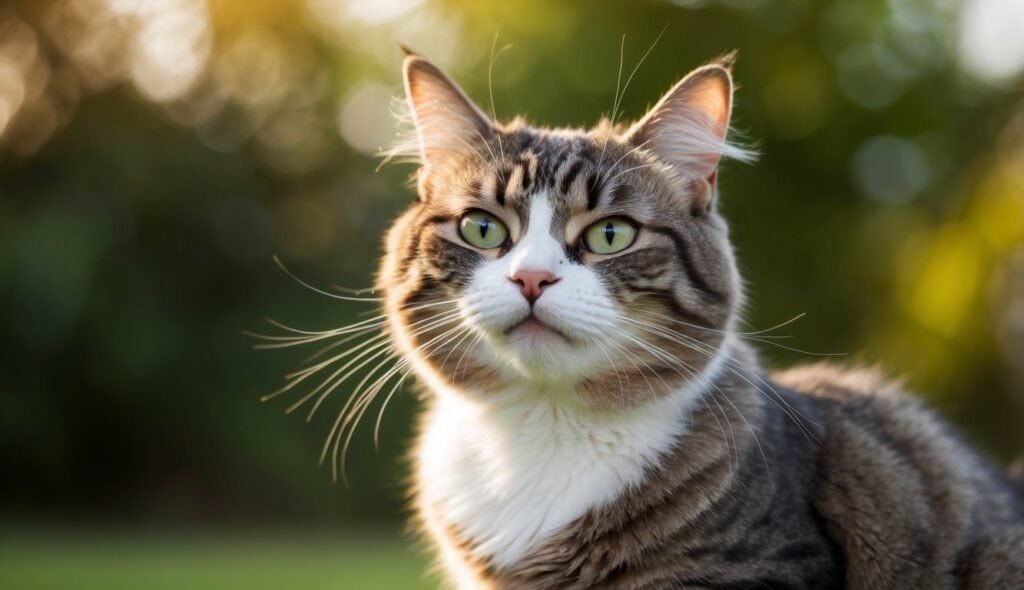
Your feline friend uses every part of their body to convey messages. From the tip of their tail to the position of their whiskers, each subtle movement holds meaning. Understanding cat body language allows you to respond appropriately to your pet’s moods, reducing stress and creating a happier home for both of you.
Decoding your cat’s signals isn’t just fascinating – it’s essential for their wellbeing. You’ll be able to spot signs of happiness, worry, or anger in your cat, helping you provide the care they need. Ready to unlock the secrets of feline communication? Let’s dive into the world of cat body language.
Understanding the Basics of Cat Body Language
Cats use their bodies to send messages. Learning to read these signals helps you bond with your feline friend. You can tell how a cat feels by looking at its posture and face.
Recognising Common Cat Postures
Your cat’s body position tells you a lot about its mood. A relaxed cat will have a loose, natural stance. Its tail might be up or gently swaying. When scared, a cat may crouch low or puff up to look bigger.
An arched back with raised fur means your cat feels threatened. If your cat lies on its back, it could mean trust or a warning. Pay attention to the tail too. A straight-up tail often means a happy greeting. A puffed-up tail shows fear or anger.
Interpreting Feline Facial Expressions
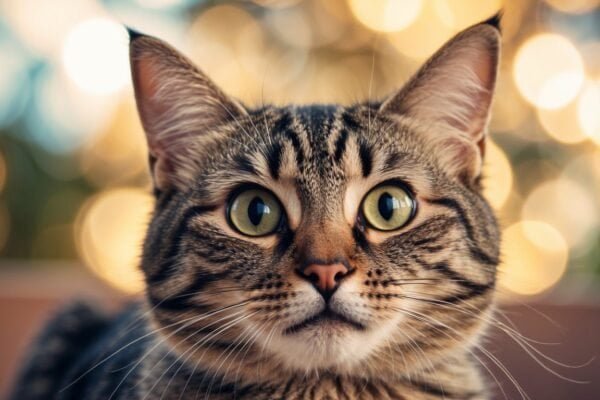
A cat’s face can reveal its feelings. Relaxed cats have soft eyes and forward-facing ears. Slow blinks are a sign of trust and affection. Dilated pupils might mean excitement or fear, depending on the situation.
Flattened ears and wide eyes suggest your cat is scared or angry. A cat showing its teeth or hissing is giving a clear warning. Whiskers can also provide clues. Forward-facing whiskers often mean curiosity, while pulled-back whiskers might signal discomfort.
Communication Through Movement
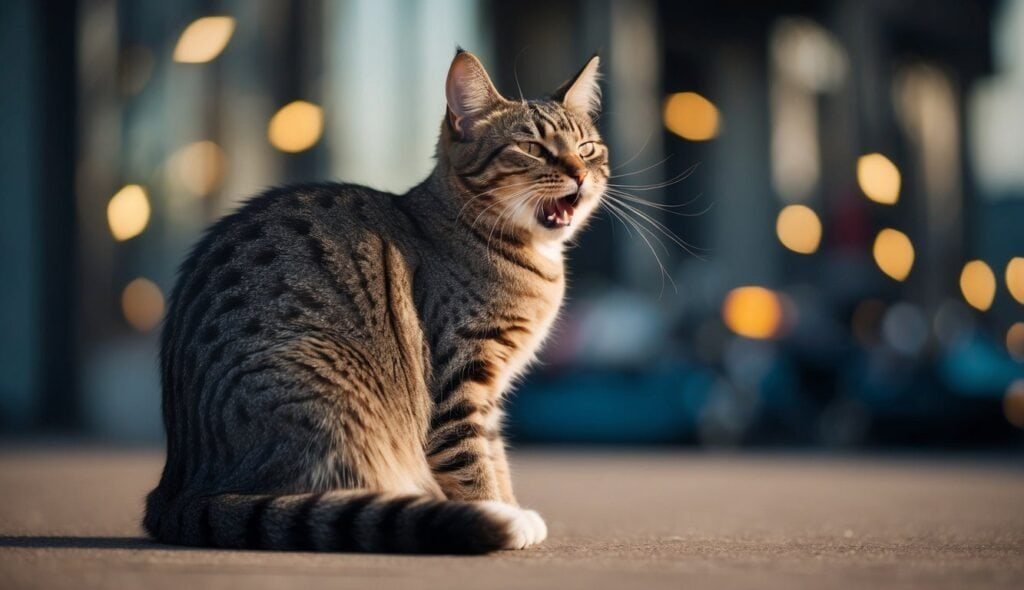
Cats use their bodies to express feelings and intentions. By watching your cat’s movements, you can learn a lot about what they’re trying to tell you.
Tail Signals and Their Meanings
Your cat’s tail is a key part of their body language. A straight-up tail with a slight curve at the tip means your cat is happy to see you. If the tail is puffed up, your cat might be scared or angry.
A low-hanging tail shows your cat is relaxed. When the tail swishes back and forth quickly, it’s a sign your cat is annoyed or about to pounce. A slow, gentle swish often means your cat is focused on something.
Watch for a question mark shape in your cat’s tail. This usually means they’re feeling playful and curious.
Ears and Whisker Positions
Your cat’s ears and whiskers can tell you a lot about their mood. Forward-facing ears mean your cat is alert and interested. If the ears are flat against the head, your cat might be scared or angry.
Whiskers pointed forward show your cat is curious or excited. When whiskers are pulled back, your cat might be nervous or unsure.
Cat posture also includes ear and whisker positions. Relaxed whiskers and slightly tilted ears often mean your cat is content. If you see one ear turned to the side, your cat is likely listening to something in that direction.
Indicators of Affection and Contentment
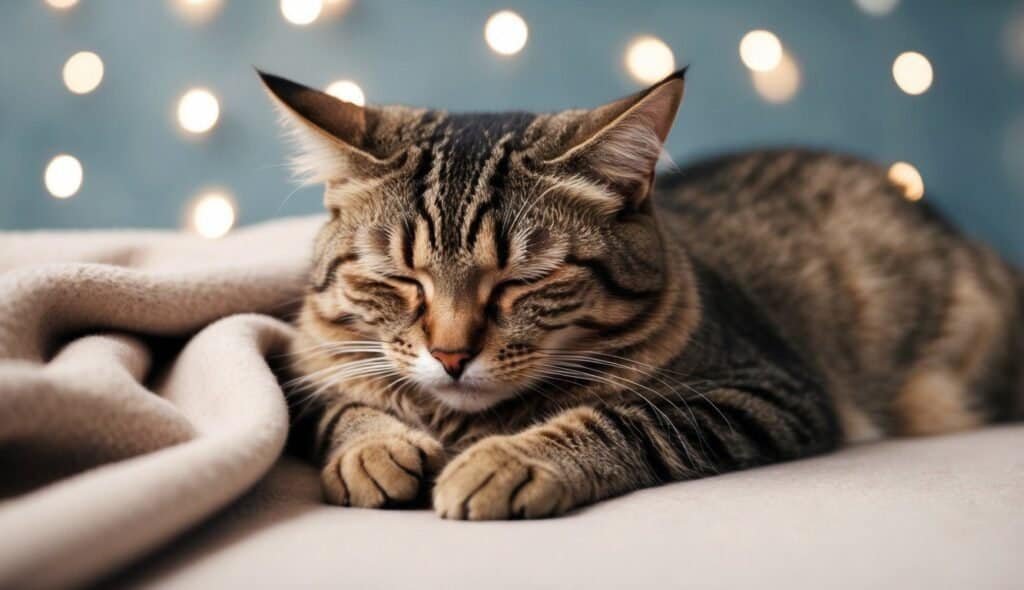
Cats show their love in unique ways. They use body language and sounds to tell you they’re happy. Let’s look at some common signs of cat contentment.
Purring and ‘Making Biscuits’
When your cat purrs, it’s often a sign of happiness. This soft rumble means they feel safe and comfy. Cats purr when they’re relaxed and content.
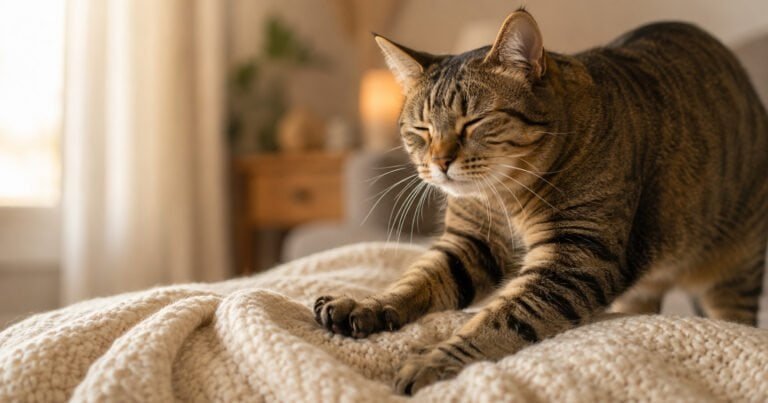
‘Making biscuits’ is another way cats show love. This is when they knead their paws on soft surfaces. You might see your cat do this on blankets or even on you. It’s a leftover habit from kittenhood when they kneaded their mum’s tummy for milk.
Some cats purr and make biscuits at the same time. This double display means they’re extra happy. If your cat does this on your lap, take it as a big compliment!
The Significance of Slow Blinks
Slow blinks are a special cat greeting. When your cat looks at you and blinks slowly, they’re saying “I trust you”. This is also called a ‘cat kiss’.
You can return the slow blink to show you love them back. It’s a nice way to bond with your cat. Slow blinks mean your cat feels safe and happy around you.
Watch for other signs that go with slow blinks. A relaxed body and soft eyes are good clues. Your cat might also have their tail up with a slight curve at the end. All these signs together show a very content kitty.
Signs of Stress or Fear in Cats
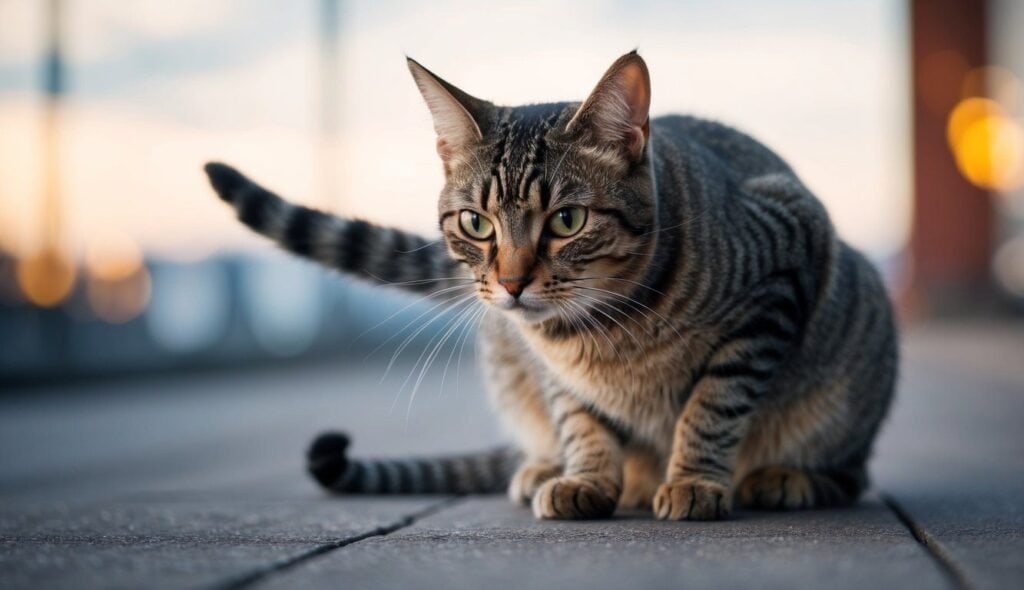
Cats show stress and fear in many ways. Their body language can tell you a lot about how they’re feeling. Watch for these key signs to know when your cat is scared or stressed.
Identifying a Scared or Threatened Cat
A scared cat may have wide eyes with large pupils. Its ears might be flattened against its head. You may notice the cat crouching low to the ground or trying to hide.
Some cats become very still when afraid. Others might shake or tremble. A stressed cat may also lose control of its bladder or bowels.
Watch your cat’s tail too. A low or tucked tail can mean fear. Some cats flick their tails quickly when stressed.
Pay attention to changes in eating habits. A scared cat might refuse treats or eat less than usual.
The Arched Back and Puffed Tail Response
When a cat feels very threatened, it may arch its back. This makes the cat look bigger and more scary to predators. At the same time, its fur will stand on end. This is called piloerection.
The cat’s tail will often puff up too. It may look like a bottlebrush. This is another way for the cat to seem larger.
An arched back with puffed fur is a clear “stay away” signal. It means your cat feels it needs to defend itself. Give a cat showing these signs some space to calm down.
Creating a Trusting Relationship
Building trust with your cat takes time and patience. By respecting your cat’s space and fostering positive interactions, you can create a strong bond with your feline friend.
Respecting Feline Space and Signals
Cats value their personal space. Pay attention to your cat’s body language to know when they want interaction. If your cat’s tail is low or tucked, give them space.
When approaching your cat, move slowly and avoid direct eye contact. This helps your cat feel safe. Let your cat come to you when they’re ready.
Provide hiding spots and high perches for your cat. These safe spaces allow your cat to observe their surroundings and feel secure. Respect these areas as your cat’s private retreat.
Fostering Positive Interactions
Create enjoyable experiences for your cat. Play with interactive toys to build trust and strengthen your bond. Use wand toys or puzzle feeders to engage your cat’s hunting instincts.
Offer treats during positive interactions. This helps your cat associate you with good things. Use gentle petting and soft voices to make your cat feel comfortable.
Try the slow blink technique. Make eye contact with your cat and slowly close your eyes. This gesture shows trust in the cat world. If your cat blinks back, it’s a sign of affection.
Be consistent in your behaviour. Cats appreciate routine and predictability. Regular feeding times and play sessions help your cat feel secure and build trust in your relationship.
Frequently Asked Questions
+How can you interpret a cat’s tail movements?
A cat’s tail is a key indicator of mood. An upright tail with a slight curve at the tip often signals confidence and contentment. A puffed-up tail means the cat feels threatened or scared. A gently swaying tail usually shows interest. But if the tail is thrashing or thumping, it’s a sign of irritation or agitation.
+What does it mean when a cat displays certain behaviours towards humans?
When a cat rubs against you, it’s marking you with its scent. This is a friendly gesture. Head-butting or bunting is another sign of affection. Kneading with paws, often called “making biscuits”, is a comforting behaviour from kittenhood. It usually means the cat feels safe and happy.
+What are the indicators of a cat’s mood when it is lying down?
A relaxed cat often lies on its side or back, exposing its belly. This shows trust, but be careful – not all cats enjoy belly rubs. If a cat is crouching low with its tail tucked in, it may feel anxious or scared. A cat curled up in a tight ball might be cold or uncomfortable.
+How do different ear positions relate to a cat’s emotions?
Ears positioned sideways can indicate uncertainty. Forward-facing ears show interest or alertness. Flattened ears against the head often mean fear or aggression. Slightly tilted back ears might suggest the cat is annoyed or overstimulated.
+What does a contented cat’s body language look like?
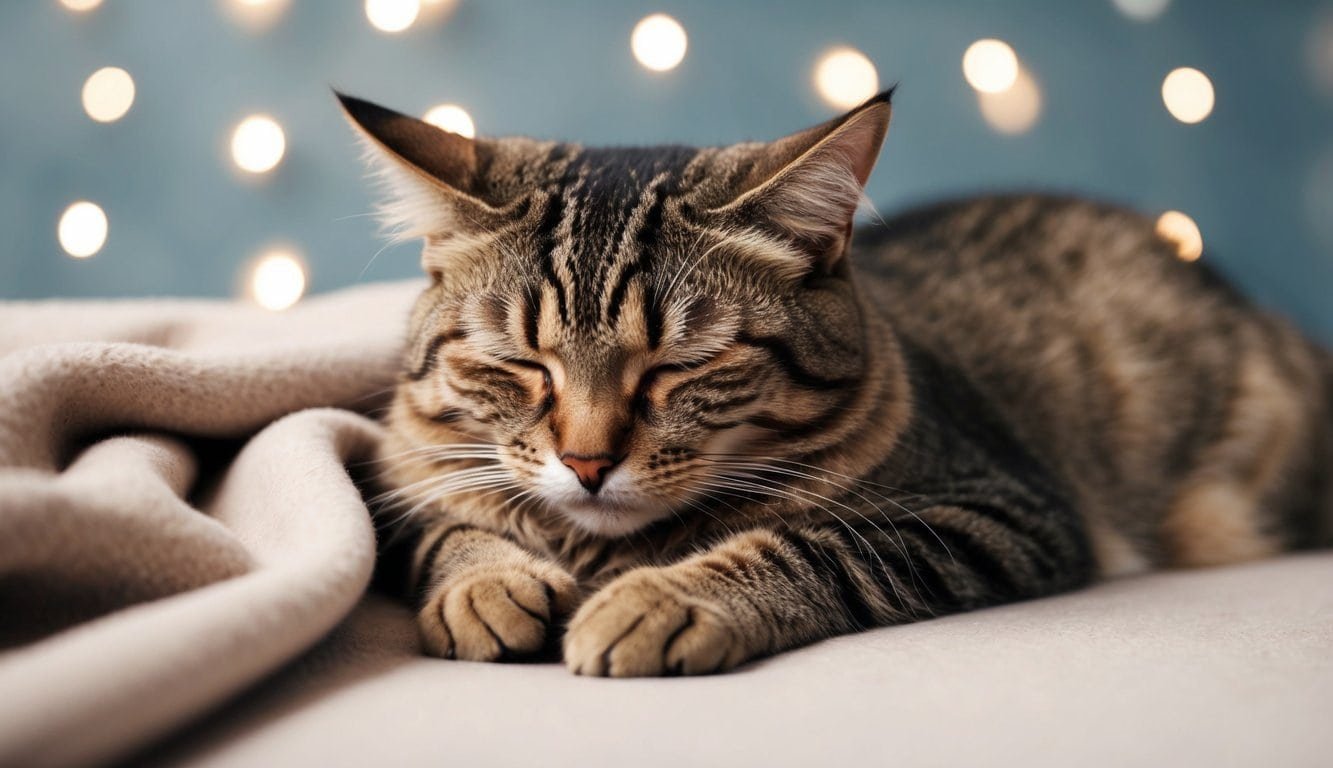
A happy cat often has a relaxed posture with a gently swaying tail. Their eyes might be half-closed, giving a sleepy appearance. Soft purring is another sign of contentment. A cat that’s lounging with its paws tucked under is usually feeling safe and comfortable.
+What are the common signs of affection shown by cats?
Slow blinking, often called “cat kisses”, is a sign of trust and affection. Cats may also show love by following you around or seeking your company. Gentle head-butting, purring, and kneading are other ways cats express affection. Some cats may even groom their owners as a sign of bonding.
+Your Cat’s Story
Calling all cat enthusiasts and lovers of all things furry and fabulous! Does your moggy go by a name that’s the cat’s whiskers? Perhaps you’ve christened your feline friend ‘Sir Purr-a-lot’ due to his incessant purring, or ‘Madam Mittens’ because she simply won’t stop playing with your socks.
We’re all ears (and tails!) to hear the marvellous stories behind your cat’s name. Share your whiskered companion’s name and the tale that makes it so purr-fect in the link below. Don’t forget to include a snapshot of your fabulous feline—after all, a picture is worth a thousand meows!
Who knows? Your charming kitty might just claw their way into a feature on our blog. So, hop to it! Let’s turn this corner of the internet into a celebration of quirky names and the lovable cats who wear them so well.